

The Anatomy of a Danube River Cruise in 2026
Europe’s defining aquatic corridor stretches 1,770 miles across the continent, slicing through ten countries and binding together the imperial capitals of Vienna, Budapest, Bratislava, and Belgrade. For generations, this current has acted as the definitive primer for the uninitiated cruiser and a shifting landscape for the veteran sailor. As the 2026 navigation season approaches, the calculus of planning a voyage here grows increasingly intricate. Selecting an embarkation date relies no longer on mere weather predictions; it demands a precise reading of hydrological tempers, shifting cultural calendars, and the deployment schedules of next-generation luxury ships.
A distinct urgency defines the 2026 season. Forward reservations outpace historical markers by a massive margin, with major lines reporting 60% of their 2026 capacity claimed before early 2025 concluded. A younger demographic drives this surge—the median passenger age has dropped from 65 to 55, bringing a demand for kinetic, ground-level engagement over passive sightseeing. Operators now routinely program aggressive shore excursions into their daily schedules, routing guests on bicycles along the riverbanks, leading strenuous vineyard hikes, and curating rigorous culinary expeditions.
To master this landscape requires a month-by-month dissection of the prime navigation window from May through October. Baseline climatic patterns intersect heavily with water level forecasts, lock maintenance timelines, and the disruptive joy of public holidays. The physical reality of the river also faces a transformation through unprecedented fleet expansions, marked by the arrival of specialized vessels from Uniworld, AmaWaterways, Emerald Cruises, Trafalgar, and Century Cruises. Weighing these criteria arms industry professionals and discerning travelers with the intelligence required to match personal ambitions with the physical truths of the water.
Navigational Realities: Water Levels and Lock Infrastructure
Environmental mechanics dictate the rhythm of the journey. The river operates as a living, volatile system, its navigability tethered to Alpine snowmelt, regional rain shadows, and heavy industrial maintenance. Travelers stepping aboard must accept a fundamental premise: nature commands the itinerary, making sudden route alterations a standard reality of the voyage.
Spring Snowmelt and High Water Dynamics
Tributaries bleeding down from the Alps and the Black Forest feed the main channel. Between March and late May, rapid snowmelt collides with heavy seasonal rainfall to gorge the riverbanks. Swollen waters impose immediate “air draft” restrictions on passing vessels. When the clearance between the waterline and the highest point of a ship’s superstructure vanishes, historic bridges become impassable stone blockades.
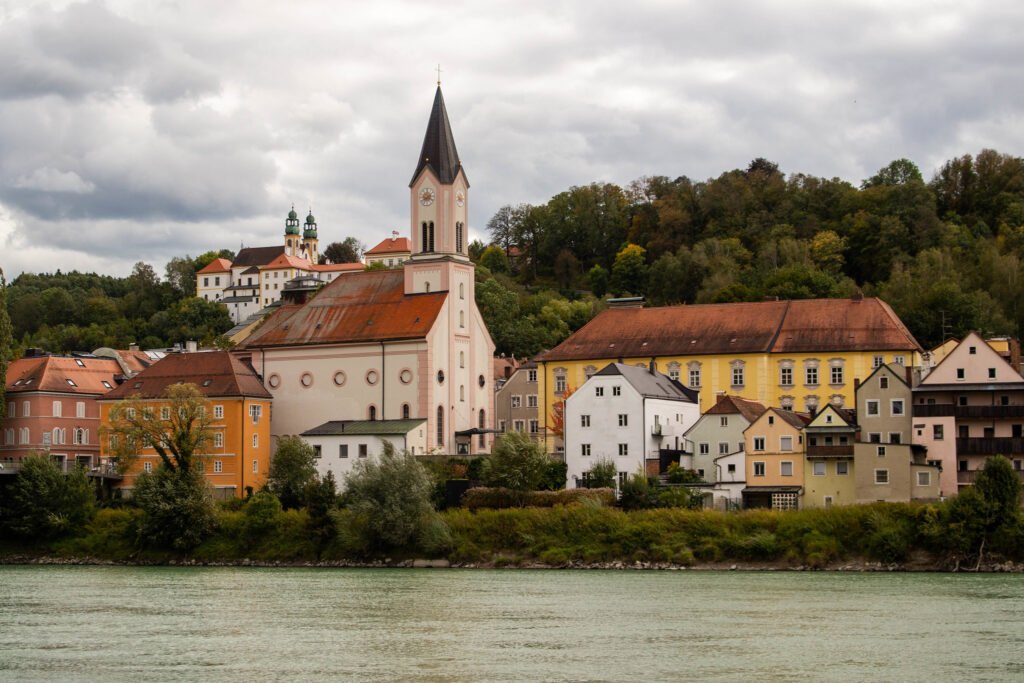
Passau, Germany—the famed “City of Three Rivers” where the Danube, Inn, and Ilz collide—often acts as a severe chokepoint. The low-hanging Luitpoldbrücke suspension bridge leaves negligible headroom during peak spring surges. Authorities monitor the channels ruthlessly; the moment the Pfelling gauge breaches 620 centimeters, all maritime traffic halts. Cruise lines react to these suspensions with practiced maneuvers. Captains reroute ships to industrial docks outside flooded city centers, dispatch luxury motorcoaches to bypass impassable gaps, or execute the complex choreography of a “ship swap.” Passengers pack their belongings and ride a bus around the blocked sector to board an identical sister ship waiting in clear waters, allowing the journey to resume.
Late Summer Droughts and Low Water Mitigation
The opposite crisis materializes in late summer. August and September carry a statistical threat of severe drought, born from sustained heatwaves and a total absence of rain. As the water depth recedes past a vessel’s minimum draft—the critical measurement from the waterline to the keel—the hull risks grinding against the riverbed.
Scorched seasons, notably the summer of 2018 and the parched late summer of 2025, expose shallow shoals across legendary stretches. Austria’s UNESCO-designated Wachau Valley and the sprawling Hungarian plains turn notoriously difficult to navigate. Water levels near the Bulgarian outpost of Ruse have historically plummeted past standard reference markers, forcing captains to restrict drafts to a perilous 1.70 meters and creep forward in tightly managed convoys. Naval architects combat this drying trend by engineering contemporary ships with wider, flattened hulls that distribute weight broadly, keeping them afloat in channels that would ground older tonnage.
The 2026 Lock Maintenance Schedule
Concrete locks tame the river’s gradient, stepping ships safely through massive elevation drops like the Iron Gates gorge separating Serbia and Romania. European waterway authorities dictate strict maintenance windows for this mechanical infrastructure, occasionally fracturing transit schedules.